
In today’s competitive digital world, running online ads is one of the best ways to attract new customers and grow your business. But when it comes to advertising online, most business owners face one common question —
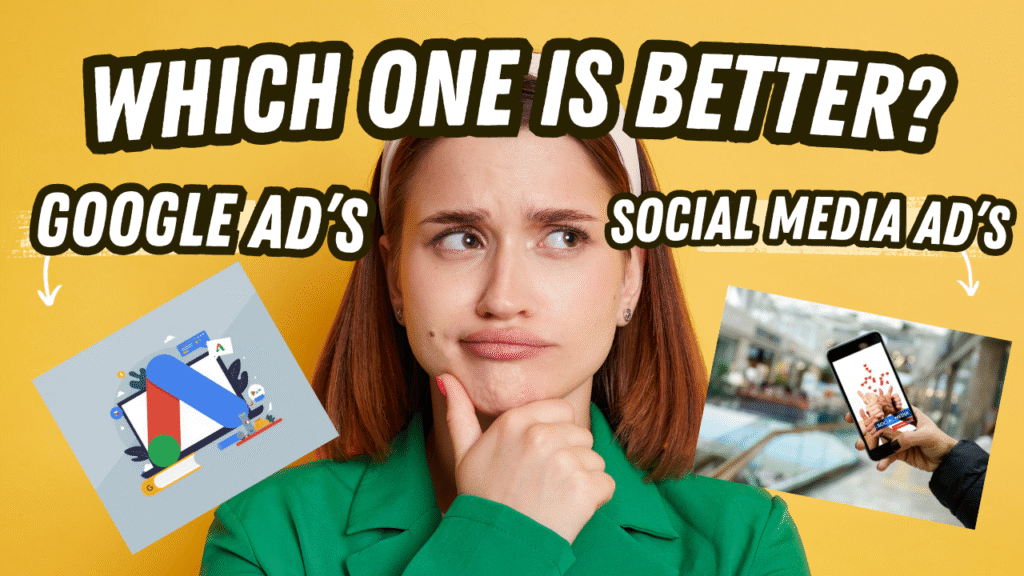
Should I choose Google Ads or Social Media Ads?
Both are powerful tools, but they work differently. As a digital marketing freelancer, I help small businesses understand these platforms and choose the one that fits their goals and budget.
Let’s explore the differences and find out which one is right for your business.
1. What Are Google Ads?
Google Ads (formerly Google AdWords) is a search-based advertising platform.
It allows your business to appear on Google when people search for specific products or services.
For example:
If someone searches “best salon near me,” your salon ad can appear at the top of the search results — instantly visible to people who are already looking for your service.
💡 Best for: Businesses that want immediate visibility and attract customers with high buying intent.
2. What Are Social Media Ads?
Social Media Ads run on platforms like Facebook, Instagram, LinkedIn, or X (Twitter).
These ads target users based on their interests, behavior, and demographics rather than search intent.
For example:
If you own a bakery, you can show ads to people who love desserts, even if they’re not searching for one right now.
💡 Best for: Building brand awareness, reaching new audiences, and connecting emotionally with customers.
3. Audience Targeting
Google Ads: Targets people based on what they search for (keywords).
You reach customers when they already have a clear need.Social Media Ads: Targets people based on who they are — their age, location, hobbies, and interests.
It’s perfect for introducing your brand to potential customers who may not know you yet.
4. Cost and Budget
Google Ads: Works on a pay-per-click (PPC) model. You pay each time someone clicks your ad.
Costs depend on competition and keywords — high-demand industries can be expensive.Social Media Ads: Usually more affordable, especially for small businesses. You can start with a small daily budget and still reach thousands of users.
💡 Tip: Combine both platforms — use social media ads for awareness and Google Ads for conversions.
5. Type of Content
Google Ads: Focuses on text-based search ads, display ads, and shopping ads.
They’re ideal for quick conversions and specific searches.Social Media Ads: Focuses on visual content — images, videos, and stories.
Perfect for showing your brand personality and engaging your audience emotionally.
6. Conversion Goals
Google Ads: Best for direct sales, bookings, or lead generation.
(Example: Someone searches “digital marketing freelancer near me” — they’re ready to hire.)Social Media Ads: Best for awareness, engagement, and nurturing relationships before conversion.
(Example: A user sees your Instagram ad, follows your page, and later contacts you.)
7. Measuring Success
Both platforms provide detailed analytics to track performance — clicks, impressions, reach, and conversions.
You can easily measure what’s working and improve your campaigns.
💡 As a freelancer, I use insights from both Google and social platforms to optimize ad performance and deliver better ROI for my clients.
Which One Should You Choose?
✅ Choose Google Ads if:
You want fast results and direct leads.
Your audience is actively searching for your product or service.
You’re ready to invest in competitive keywords.
✅ Choose Social Media Ads if:
You want to build brand awareness and audience trust.
You have a visually appealing product or service.
You want to engage and grow a community around your brand.
Conclusion
Both Google Ads and Social Media Ads are powerful in their own ways.
The right choice depends on your business goals, target audience, and budget.
As a digital marketing freelancer, I help businesses plan, create, and manage ad campaigns that deliver measurable results — whether on Google or social media.
🚀 Want to know which platform suits your business best?
Let’s discuss your goals and create an ad strategy that drives real growth.